Lesson 2: Foods, plants and flowers for healing
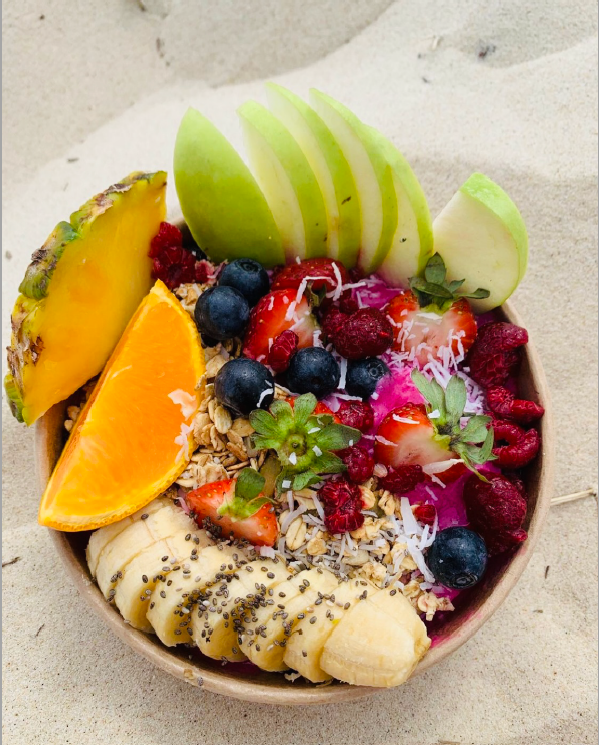
Just like the tools and resources you have been learning, being curious about and experimenting with throughout this course (like journaling, meditation and gratitude practices)…
Foods, plants and flowers can too, be potent medicines that can support…
Our energy
Our mood
Our creativity
Our connection with ourselves and those around us
The health of our internal organs.
What we ingest truly can impact all facets of our life and wellbeing.
While I’m an advocate for everyone nurturing and nourishing their bodies with healthy foods and flowers…
I’m particularly passionate about people who are journeying with healing trauma, nurturing themselves in this way.
Why?
Because healing from trauma can arouse a lot within our physical, energetic and emotional bodies…
And when this happens, they need all the love and support they can get to soothe them and bring them back into equilibrium.
In fact, nurturing our bodies in this way can actually support our healing from trauma because it gives us fuel, builds our inner wellbeing and acts as literal medicine.
For some, learning how to eat in a more nourishing way can feel confusing and overwhelming but my simplest advice comes from the famous words of journalist and author, Michael Pollen…
“If it came from a plant, eat it; if it was made in a plant, don't.”
If ever you’re in doubt about what may or may not be a healthy and nourishing food option, I invite you to come back to these words.
(Also, I’ve created two meal plans for you below, to help you navigate your journey forward with ease!)
What I want to make note of here though, is to be kind to yourself as you invite in dietary changes…
You don’t have to go in ‘all or nothing’ and if you ‘slip up’ then this is okay!
Many of the processed foods we eat are addictive (hello, sugar!) and many of us use food to cope with the ups and downs of life (like turning to the fridge when we experience an emotional upset).
Know that a complete overhaul of your diet will not happen overnight…
Treat yourself kindly and invite in change that feels achievable and sustainable.
Any change is progress (even if it’s just replacing a processed snack with a handful of nuts, once a day!) and this is absolutely worthy of celebration.
Before I offer specific dietary suggestions, I want to be clear about what I mean by my reference to plants and flowers.
While everyone is aware that food can be ingested, some people are unaware that so too can some flowers. In fact, some flowers are incredibly healing, medicinal and supportive for our health.
Some of the most common healing plants and flowers that you may have heard of (and even have in your home!) are:
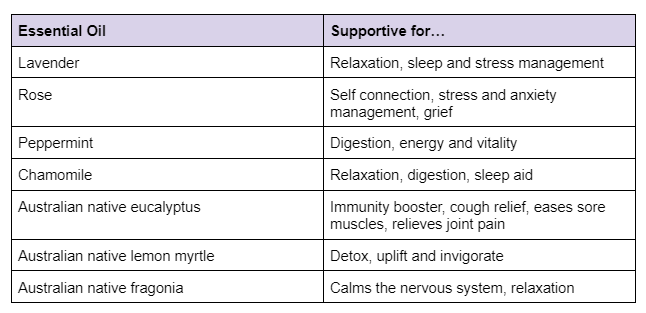
An easy and potent way to incorporate flower medicine into your life is through the use of flower essences (my favourite brand is Bach Flower Remedies) - something I personally recommend to all my clients. I carry Rescue Remedy with me (which is a blend of 5 remedies) that is used for stress or sudden shock. Below are some of my favourites….
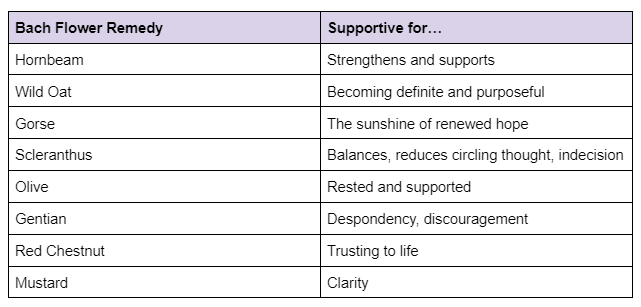
Flowers are so nurturing for our energy and emotions and something that I personally couldn’t live without.
Nature provides us with many remedies. To help you see this in action, let’s explore four common health challenges, and the foods and flowers that can be most supportive for them, in more detail - low mood, stress and anxiety, poor sleep and low immunity.
LOW MOOD
Cacao (not to be confused with cocoa) is a rich source of flavonoids, which have been shown to increase blood flow to your brain, reduce inflammation, and boost brain health - all of which can support mood regulation.
Basil is rich in linalool, which gives it its woodsy scent. It oxygenates the air (up to an incredible 20 hrs per day), helping to purify and clean our environment. In turn this supports improved mood, reduces inflammation and can regulate your blood sugar levels (Cassoobhoy 2020*).
Rose In clinical studies Rose has been shown to work as a natural anti depressant, relaxant, reduce anxiety and improve sexual dysfunction (Mohebitabar 2017*).
Bananas are full of vitamin 6 which help synthesise serotonin and dopamine. Dopamine regulates mood, whilst serotonin releases endorphins that are associated with happiness, motivation and being productive. (Davidson 2020*)
STRESS AND ANXIETY
Ginger soothes your central nervous system (as does lemon balm) and muscles.
Apples help the body recover from stress. (William 2020*)
Berries are full of antioxidants which help reduce inflammation, which often goes hand in hand with low mood. (Davidson 2020*)
Reishi Mushroom is incredible and one of my fave’s. It works on many levels including improving immune response, sleep, anxiety and mood(Wachtel-Galor* 2021) and hormonal balancer (Seweryn 2021*).
SLEEP
Cherries are well known sleep tonics (Binks 2020*), as are chamomile and lavender.
A randomised study also found that eating zinc rich seafood, such as oysters, also supported sleep. (Saito 2017*)
According to a recent study, Rosemary contains several medicinally active constituents including rosmarinic acid and carnosic acid and have been used to calm the central nervous system (Ghasemzadeh 2020*). So can be effectively used for sleep, anxiety and depression.
Jasmine flower is also a beautiful sleep tonic
IMMUNITY
Foods high in vitamin C such as papaya, kiwi fruit and citrus are potent immunity boosters.
Turmeric is incredible at reducing inflammation in the body, and ginger strengthens our immune system.
Garlic and onions are both antimicrobial and help us detox from heavy metals.
Celery juice is a beautiful tonic that strengthens the entire immune system. (William 2020*)
Honey has incredible antimicrobial properties.
Green tea increases cell-mediated immunity while decreasing the risk of certain cancers and the risk of cardiovascular disease.
Ginseng enhances the production of natural killer cells which form part of our innate immune response. (Klein 2000*)
Lemon verbena is a powerful immune tonic and supports antioxidant response (Carrera-Quintanar 2010*).
Vitamin C supports a healthy immune system by controlling “oxidative stress and inflammation”. (Calder 2021*)
Vitamin D supports the activity of several immune cell types as well as promoting the production of antimicrobial proteins within the body. (Calder 2021*)
Zinc supports the activity of many cells of the immune system, helping to control oxidative stress and inflammation. It also has specific antiviral actions. (Calder 2021*)
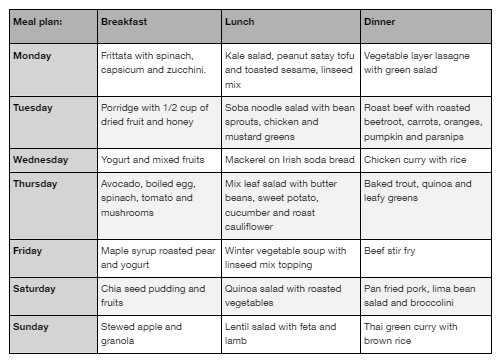
To help you begin your journey with healthy eating, I’ve also created two nutritious wholefood meal plans for you to journey with.
The key to creating your own meal plan is to eat more fruits, veggies, leafy greens, pulses, nuts and legumes.
You can also think about it like eating a rainbow, the greater the variety of colours, the more varied phytonutrients, antioxidants and macro and micro nutrients you are consuming, which are all essential for a healthy you.
If following this meal plan feels like too much of a leap from your current diet, then begin slowly. Even just selecting one meal per day to try is a wonderful first step!
MEAL PLAN #1
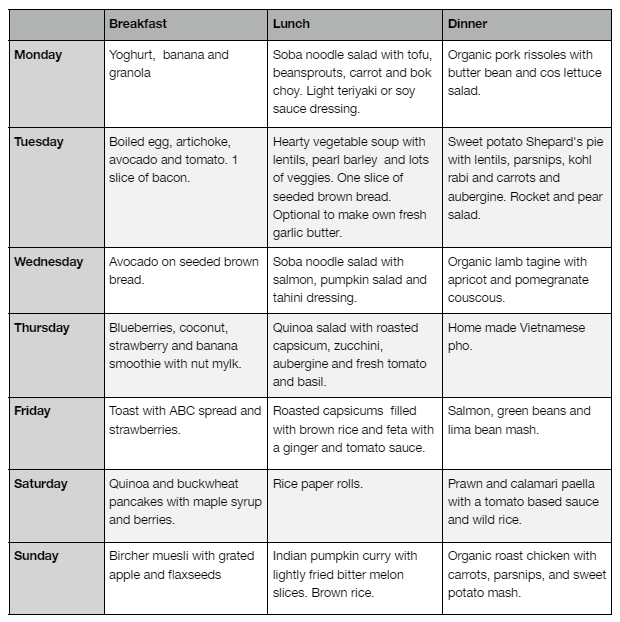
MEAL PLAN #2
References
Calder PC, Foods to deliver immune-supporting nutrients, Current Opinion in Food Science, 2021 Dec
Klein C et al, From food to nutritional support to specific nutraceuticals: a journey across time in the treatment of disease, Journal of gastroenterology. 2000 Dec
William A, Medical Medium Cleanse to heal, Hay House, 2020
Davidson K and Butler N, 9 Healthy Foods That Lift Your Mood, <https://www.healthline.com/nutrition/mood-food>, 2020
Binks H et al, Effects of diet on sleep: a narrative review, Nutrients. <https://www.mdpi.com/2072-6643/12/4/936>, 2020 Apr
Saito H et al, Zinc‐rich oysters as well as zinc‐yeast‐and astaxanthin‐enriched food improved sleep efficiency and sleep onset in a randomized controlled trial of healthy individuals, Molecular nutrition & food research. 2017 May
Wachtel-Galor S et al, Ganoderma lucidum (Lingzhi or Reishi). Herbal Medicine: Biomolecular and Clinical Aspects. 2nd edition. <https://www.ncbi.nlm.nih.gov/books/NBK92757/>, 2011
Seweryn E et al, Health-promoting of polysaccharides extracted from Ganoderma lucidum. Nutrients, <https://www.mdpi.com/2072-6643/13/8/2725/htm>, 2021 Aug
Cassoobhoy A, Health benefits of basil, Nourish, <https://www.webmd.com/diet/health-benefits-basil>, 2020 Aug
Mohebitabar S et al, Therapeutic efficacy of rose oil: A comprehensive review of clinical evidence, Avicenna journal of phytomedicine, <https://www.ncbi.nlm.nih.gov/pmc/articles/PMC5511972/>, 2017 May
Ghasemzadeh R et al, Therapeutic effects of rosemary (Rosmarinus officinalis L.) and its active constituents on nervous system disorders, Iranian journal of basic medical sciences, <https://www.ncbi.nlm.nih.gov/pmc/articles/PMC7491497/>, 2020 Sept
Carrera-QuintanarL et al, Antioxidant effect of lemon verbena extracts in lymphocytes of university students performing aerobic training program, Wiley online library, <https://onlinelibrary.wiley.com/doi/abs/10.1111/j.1600-0838.2010.01244.x>, 2010 Nov