Lesson 3: Tending Your Inner Landscape
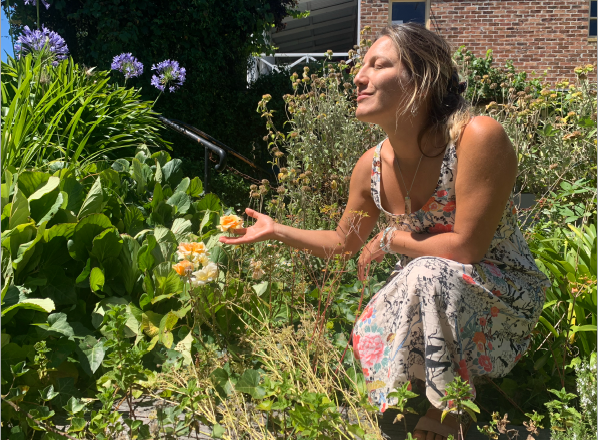
Emotional regulation is our capacity to influence, and feel a sense of agency over, our own emotional state.
It is not the suppression of emotion. It is not the performance of calm. It is not the ability to remain unmoved by difficult things. It is something altogether more nuanced and more powerful than any of these: the capacity to feel what is present — fully, without being overwhelmed by it — and to choose, from that felt place, how to respond.
Why Emotional Regulation Was Not Taught
For most of us, emotional regulation was not something we were explicitly taught. It is most often role modelled — absorbed from the caregivers and communities of early life, through the way they handled their own emotional states and the states of those around them.
Many of us were raised by people who themselves had never been taught to regulate. Who managed difficult feelings through suppression, explosion, withdrawal, addiction, control or the projection of their discomfort onto those around them. This is not a judgement of those caregivers. It is simply an acknowledgement that what was not given cannot be passed on — and that the capacity for emotional regulation, like all capacities, must be learned somewhere.
Adult experience can also disrupt whatever regulation was developed in earlier life. A relationship that kept the nervous system in a state of chronic activation. A period of sustained stress or grief that exhausted the regulatory capacity of the system. A trauma that rewired the threat response so thoroughly that the baseline shifted — and what was once manageable no longer feels so.
Wherever yours began and whatever has influenced it since — the capacity for emotional regulation is not fixed, it can be developed. At any age. At any stage of a healing journey. This is one of the most hopeful findings in contemporary neuroscience, and it underpins everything this module is designed to offer you.
The Weather Within
Your emotional landscape is not something to be controlled. It is a terrain to be mapped — with curiosity, with patience, with the same attentiveness a skilled naturalist might bring to an unfamiliar landscape.
Emotions are not random. They are coded intelligence. They are the body's primary language for communicating need, for signalling threat, for registering loss, for celebrating connection. Anger says: a boundary has been violated, or a need has been unmet. Grief says: something beloved has been lost. Fear says: there is a threat, real or perceived, that requires attention. Awe says: I am part of something greater than myself and offers perspective. Shame says: I have been taught that some part of me is fundamentally wrong.
None of these are enemies. All of them are messengers.
The work of emotional regulation is not to silence the messengers. It is to develop enough inner spaciousness — enough of a pause between the feeling and the response — that you can receive the message without being swept away by it. To become, as one somatic practitioner describes it, the sky that holds the weather rather than the weather itself.
When we are dysregulated — when the emotional weather becomes a storm — we tend to respond from the most frightened, youngest part of ourselves. We react from our trauma age rather than our actual age. We say and do things that do not reflect who we want to be. And then, often, we carry the shame of that reactivity as another layer of evidence that something is wrong with us.
Stephen Porges' Polyvagal research gives us an important map here. When we are in sympathetic activation — in fight or flight — the prefrontal cortex, the part of the brain responsible for nuanced, compassionate decision-making, goes partially offline. We are not able to make sovereign choices from a state of full activation. The nervous system needs to be brought back toward the ventral vagal state — the state of safety and connection — before genuine choice becomes available.
This is why the somatic practices you are building throughout this program are not supplementary to the emotional work. They are the emotional work. The breath. The body scan. The grounding. The movement. These are not relaxation techniques. They are physiological interventions that shift the nervous system toward the state in which healing becomes possible.
Responding Rather Than Reacting
We explored the distinction between reacting and responding in Module 2. Here we go deeper.
Reacting happens when the emotional weather takes over — when the activation is so immediate and so complete that the pause between stimulus and response collapses. The five-year-old drives the car. The wound speaks before the adult can intervene.
Responding requires a pause. Not the suppression of feeling — the feeling is fully present, fully real, fully valid — but a moment of space in which our sovereign part of the self can ask: what is actually happening here? What do I need? How do I want to move through this?
Peter Levine's work on trauma resolution speaks to the body's role in this pause. When activation arises, one of the most powerful things we can do is bring attention to the body — to notice where the feeling lives, to breathe into it, to allow it to move rather than driving it underground. This is not always comfortable. But it is effective. The body that is attended to does not need to escalate in order to be heard.
Emotional Regulation and Women
It is important to name something that is rarely spoken about directly: women are socialised, from earliest childhood, to regulate the emotions of others — often at the expense of their own.
The girl who learns to read the room and adjust herself accordingly so that no one becomes uncomfortable. The woman who carries the emotional temperature of every relationship she is in, managing, soothing, smoothing — often without anyone asking her to, because the asking has become so internalised it no longer requires a request. The perpetual emotional labour that goes unacknowledged because it is simply expected.
This is not emotional regulation. This is emotional suppression cavorting as care. And it comes at an enormous cost — to the body, to the self, and to the capacity for genuine connection.
Genuine emotional regulation is not about making others comfortable. It is about developing a stable, compassionate relationship with your own inner weather — so that you are neither overwhelmed by it nor required to override it in service of everyone else's comfort.
Audre Lorde wrote: "I have come to believe over and over again that what is most important to me must be spoken, made verbal and shared, even at the risk of having it bruised or misunderstood." This is emotional regulation in its most courageous form — not the suppression of what is felt, but the capacity to feel it fully and then choose, consciously, how and whether to voice it.
Journal Prompts for Lesson 3
In what circumstances do you tend to react from an emotionally dysregulated place rather than respond?
Can you identify the age you feel in those moments — the wound or the version of yourself that is driving the response?
Where in your body does emotional activation tend to live? What sensations arise, and where?
Where in your life have you been regulating the emotions of others at the expense of your own? What has that cost you?
What would it mean to develop a more compassionate, curious relationship with your own emotional weather — to become the sky rather than the storm?
Arjuna x